
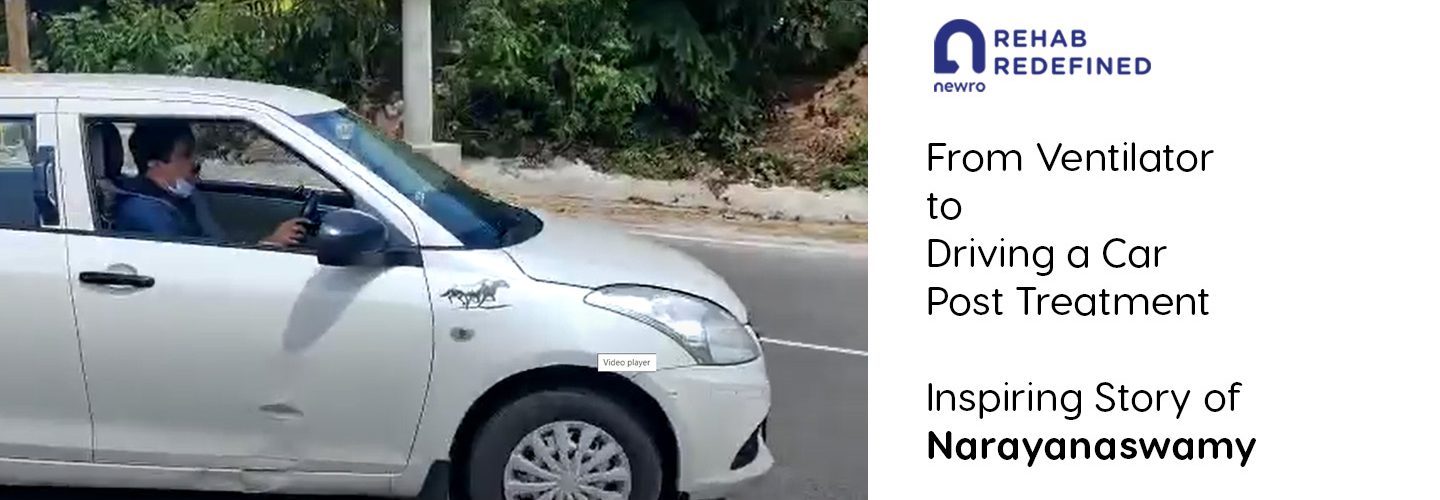
This happened in the year 2016.
A 49-year-old senior executive in a multinational (MNC) car manufacturing company in Bengaluru, India walked into the emergency department of a leading private hospital (one of its branches with secondary level care & which was his neighborhood hospital) one evening with sudden symptoms of severe giddiness or vertigo (without any ear related symptoms). He entered and himself asked the emergency staff that he wanted to see a senior neurosurgeon (whose old patient he was). However, the staff there assumed that this was an ENT problem, and he was eventually admitted under the ENT doctor and treatment was started. 12-14 hours the admission, he was found to have become drowsy and semi-conscious, and the neurologist evaluated him and suspected an acute stroke (VBI or vertebra-basilar stroke) and ordered for an MRI of the brain (MRI Brain stroke protocol – this is different from a routine MRI of the brain where early strokes can even be missed!) the MRI needed to be done at a nearby diagnostic center as this hospital didn’t have one! By the time the appointment was fixed, patient shifted in ambulance, MRI scan done, patient shifted back and report got, it was 26 hours since he had the first symptoms of the stroke and 24 hours since he had entered the emergency department.
#goldenhourinstroke. #earlystrokedetection. #MRIBrainstrokeprotocol. #strokereadyhospital. #awarenessofstrokesymptoms #FAST.
The MRI brain revealed a massive cerebellar infarct (brain stroke involving the cerebellum) with severe increased pressure inside the back portion of his skull & brain (raised ICP or Intra Cranial Pressure) and he had become deeply unconscious (GCS – Glasgow Coma Score 5/15) and was having labored breathing (difficulty in breathing experienced by coma patients due to brain dysfunction). He was immediately shifted to the ICU and put on the mechanical ventilator and the same neurosurgeon was now called in. He decided that an immediate major brain surgery (decompression of the swollen/ edematous brain that causes a ‘pressure cooker effect inside the skull resulting in death & severe disability) was needed and the same was communicated to his young wife, teenage son (who was studying 10th standard) and his BIL who was a senior anesthesia doctor and heading the ICU of a small private hospital for over 10 years. When this was communicated to the family, the BIL told the neurosurgeon – “Doctor, with due respects to you and your skill, in the last 10 years of my experience as an ICU head of a small hospital, I have not seen one such patient survive! To this statement, the senior neurosurgeon countered – Dr.M, not only have I had enough patients who have survived, I even have enough of such patients who are back to their lives and even work! But I agree that in such a critical situation, the chance of death & disability is very high” and the family consented for the surgery.
#lifeafterstroke #neurosurgeryinacutestrokes #brainsurgeryforstroke
Post the brain surgery, the patient unfortunately remained deeply unconscious (deep coma with a GCS score of 2T/15 – the worst possible coma score) and on the ventilator. As he showed no improvement in the coma score whatsoever in the next 1 week, the family was very stressed and most doctors (including the intensivist or ICU doctors) felt that this man was probably ‘brain dead’ and there was ‘no hope’ whatsoever. However, the neurosurgeon had seen enough patients of cerebellar strokes who have remained like this for atleast 3-4 weeks and then improve. There are no scans (CT scan or MRI scan) currently available in this world which can predict which brain is reversibly damaged and which is irreversibly damaged. The family chose to continue treatment based on the ‘hope’ given by the neurosurgeon. The patient remained on ventilator for 3 weeks, in the ICU for 4 weeks and underwent tracheostomy (tube put into the windpipe via a hole in the front of the neck for managing secretions) and a PEG (feeding tube put directly into the stomach).
#ventilatorpatientalsorecover. #GCS. #comascore. #tracheostomy. #PEGtube
Within 2-3 days after the brain surgery, even when the patient was deeply unconscious and on ventilator, intensive neuro rehabilitation was started by Team Newro. The ‘brain ability’ assessment (done by using a patented test called the SEFA – Self Evaluation of Functional Abilities in neuro patients) done revealed a C2C score of C2C BIR 1a (the worst possible score).
Team newro has 2 treatment approaches for such patients
- WUUB – Waking Up the Unconscious Brain – by doing ‘coma stimulation’ techniques
- Keeping the body ‘future ready’
#SEFA. #C2C. #earlyrehabinstroke #WUUB #comastimulation
The VOST protocol – for managing and minimizing the risk of aspiration pneumonia was put in place very early in the ICU and this was followed through until the tracheostomy & feeding tubes were removed safely. Over the next 2 months in the hospital, the intensive neuro rehabilitation was continued (along with the medical management) the patient showed a slow but gradual improvement in the neurological status and eventually woke up after about 6-7 weeks of the stroke and began recognizing close relatives and responding to one-step commands. Once his limb movements and his wakefulness improved, oral feeding was gradually introduced (after swallowing assessments were done) the tracheostomy & feeding tubes were removed.
#VOSTProtocol #aspirationpnuemonia #tracheostomy #feedingtube #PEGtube.
[Intensive neuro rehabilitation, as done by team newro involves a multi-disciplinary team effort which includes the physiotherapist, occupational therapist, speech & language therapist, swallow therapist, pain therapist, coma therapist and neuro psychologist.]
#intensiveneurorehab #multidisciplinaryrehab
Once he was able to walk with support to the bathroom and able to take feeds orally (though still fed by the family), he was discharged from the hospital and OPD based intensive neuro rehabilitation was continued. His memory and cognition were found to be grossly intact (assessed by the cognitive therapist) and the vision was also okay. Over the next 3-4 months he made rapid progress and improvements and made a total recovery.
He is now back at work in his original company, same job and actively leading his life! In the year 2021, he even climbed the chamundi hills in Mysuru and drives his kinetic hona scooter as well as his car.
#lifeafterstroke #strokesurvivor #backtowork #jouneyofhope





Add comment